Judge Wheeler Error 15 of 18: 214 Days Pending, 179 Unopposed
Rule 15(a) commands that leave to amend be freely given when justice so requires. The motion sat 214 days, unopposed for the first 179. The Order addresses the standard, the silence, and the motion to strike the late opposition nowhere.
Documents Overview
Charleston County Court of Common Pleas Case number: 2025-CP-10-05095
Filing Date: August 3, 2026
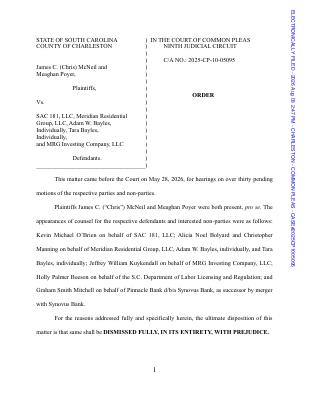
Document: Order of Dismissal With Prejudice, signed by Judge William W. Wheeler, III (29 pages)
Contents: Dismisses Counts II, IV, and V under SCRCP 12(b)(6), denies leave to file the Second Amended Complaint, and dismisses Counts I, III, and VI with prejudice as a Rule 11 sanction resting on six findings of fact. Filed 67 days after the May 28, 2026 hearing.
Charleston County Court of Common Pleas Case number: 2025-CP-10-05095
Filing Date: August 12, 2026
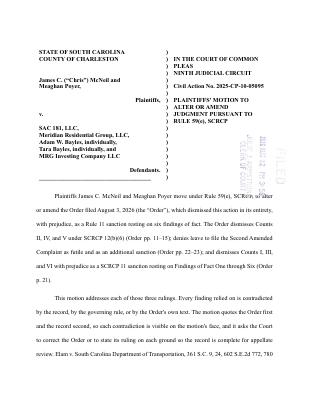
Document: Plaintiffs’ Motion to Alter or Amend Judgment Pursuant to Rule 59(e), SCRCP
Contents: Twelve sections quoting the Order first and the record second, so each contradiction shows on the motion’s face. Includes the provenance study measuring how much of the Order’s Analysis matches defense briefs verbatim.
Charleston County Court of Common Pleas Case number: 2025-CP-10-05095
Filing Date: August 14, 2026
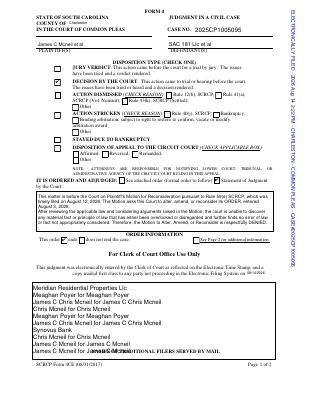
Document: Order Denying Plaintiffs’ Rule 59(e) Motion (Form 4)
Contents: The denial arrived two days after the motion, within 48 hours, on a form order. Every question the motion posed remains standing, now preserved for the Supreme Court of South Carolina and the federal courts.
Executive Summary
Sixty-Seven Days, Then Eighteen Errors
The May 28, 2026 hearing with Judge Will Wheeler included a promise of a ruling within ten days. The ruling arrived sixty-seven days later, on August 3, 2026, five days after the Plaintiffs' July 29, 2026 Notice of Strategic Thought Leadership and Federal Court Stance reached the docket. Twenty-nine pages dismissed every count with prejudice, denied leave to amend, and rested six sanctions findings on the family's conduct.
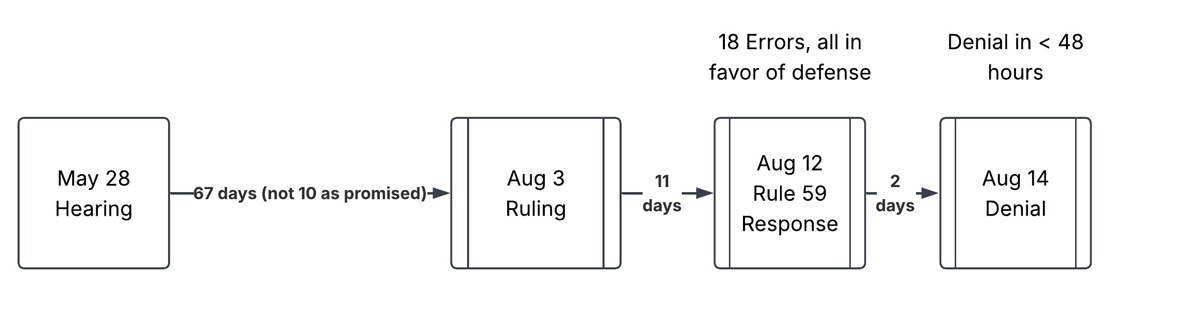 On August 12, 2026 the family filed a Rule 59(e) Motion cataloguing eighteen verifiable errors in five identified categories:
- Dates moved one year;
- Claims the cited record contradicts;
- Sections of the Order contradicting each other;
- Authority quoted in half, borrowed from defense briefs; and
- The marks of a document released ahead of one complete read.
The denial arrived within 48 hours, on a form order.
One particular finding tells the story: Every substantive error runs the same direction, favoring defense: toward dismissal. Eighteen of eighteen. 100%. It doesn't appear random.
We did this so you can see for yourself. Pick any error below and check it. Every error documented here shows the Order's words, the record's words, a screenshot of the page itself, and a docket link. So verification takes minutes.
And we are looking at this as a system, so invite the reader to take a deeper dive behind the scenes with us, and see how the SC Justice System is structured to produce these kinds of results. And what we can do about it. One method of analysis is the iceberg model from Systems Thinking.
How to Read the Iceberg on Each Page
Picture an iceberg. Events float above the waterline: the eighteen errors, the rulings, the dates on the docket. Three deeper layers sit below the surface: Patterns, Structures, and Mental Models. Every level deeper brings you closer to a more perfect leverage point for changing the system. Permanently.
Work only at the event level and not much changes. Remove a dictator and the next one seizes the palace. Snip weeds at the stem and the roots send up more by Friday. Redraw the org chart and the same incentives redraw the same behavior inside a week. Lasting repair happens at the Mental-model level, where beliefs about who deserves access to justice live. Change the belief and everything above it reorganizes: filing rules, scheduling habits, how a clerk greets a citizen at the counter. Each page in this gallery drills from one event down to the model that produced it, then climbs back up carrying a replacement.
A deeper dive into the iceberg model appears in Why Systems Thinking and Strategic Thought Leadership in Housing Justice.
Understanding This Error Through the Iceberg Model
Events
What Happened?
Error 15/18: 214 Days Pending, 179 Unopposed
Previous | Index | Next
The analyzed passage, in the court’s own Order:
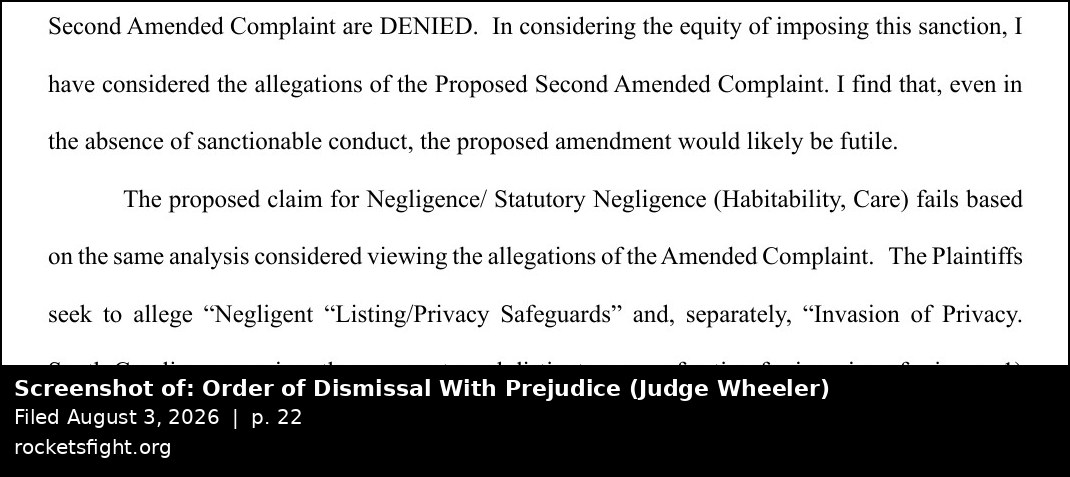
What the Order States
Rule 15(a), SCRCP, directs courts to grant leave to amend freely when justice so requires. The family moved for leave to file the Second Amended Complaint on October 24, 2025, and renewed the motion on October 30. It then waited 214 days to judgment. Through the first 179 of those days every defendant stayed silent; the first opposition arrived April 21, 2026, and the family moved to strike it as untimely.
“... the proposed amendment would likely be futile.”
Order of Dismissal With Prejudice, August 3, 2026, p. 22
The Order denied leave as futile and as an added sanction. It engages the freely-given standard zero times, the 179 days of silence zero times, and the motion to strike zero times.
An unopposed motion under a freely-given standard points one way. The Order reached the other way by routing the question through the sanction instead of through the rule. The 214-day wait then turned into ammunition: delay the court controlled got counted against the people who waited. Across this case, motions from the self-represented side aged 117 to 214 days while defense motions moved in days.
Why It Matters
The easiest case a liberal amendment rule contemplates looks like this one: a motion every defendant ignored for half a year. The family got the opposite outcome, permanently, and the delay they endured became a reason to deny them. Their alter-ego and equitable claims walked out with the denial, and the ownership questions inside those claims went with them.
Verify It Yourself
Previous | Index | Next
Patterns
What Recurs?
Class D: the governing standard stays off the page. Like the Karppi burden in Error 7 and Rule 9(b)’s second sentence in Error 12, the text pointing toward the family went unquoted. Eighteen errors, and each one shortens the road to dismissal.
The five error classes in this ruling:
- Dates moved one year
- Claims the record contradicts
- The order contradicting itself
- Rules quoted in half, borrowed from defense briefs ← this error
- Marks of a release before one complete read
Other errors in the same class:
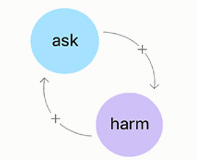
Two patterns run across the whole docket, page after page. The first, institutional betrayal: the places built to protect people produced the harm instead. A family carried a repair complaint into a courthouse, and that courthouse thinned their evidence at the scanner, voided their subpoenas at the counter, and sanctioned them for asking. The second, the Ask-Harm Loop: each request for fairness draws a fresh dose of harm, and each dose makes the next request necessary. Ask for an accommodation, wait 117 days. Publish the record, collect a footnote. Move to end your own case gently, receive the harshest ending available. The loop feeds itself, and it converts every attempt at repair into new material for the file.
Read more: levels of institutional betrayal and the Ask and Harm Loop in the Housing Justice Audit report. For the full method, visit why systems thinking guides this case.
Structures
What Enables?
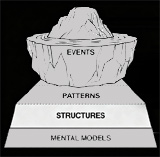
Structures are the "hardware" to the patterns’ "software". A system can essentially run on "auto-pilot" once they are in place, with the system running in certain patterns like a train follows its tracks.
Drilling down to this level reveals how South Carolina's courthouse machinery obstructs access to justice for certain people: it’s about who picks the judges, who gets to click to e-file instead of fighting traffic to pass paper across a counter, and what the scanner does to the evidence.
Six pictures map that road. Read them together and the two-tier design shows up as purposeful design. The Mental Models level below points to what purposes.
 | South Carolina picks its circuit judges by legislative election. The legislature runs thick with practicing lawyers. The bench arrives filtered through one profession's network. |
 | Two states out of fifty hand judicial selection to the legislature: South Carolina and Virginia. Forty-eight states chose another road. |
 | SC restricts access to the South Carolina Judicial Branch E-Filing System based on the user's role. Only licensed SC Attorneys and Out-of-State Attorneys with SC Licenses can file electronically. Self-Represented (Pro Se) Litigants cannot use the e-filing system and must file their legal documents using traditional paper methods. |
 | A self-represented filer drives downtown, parks, walks in, waits, and hands paper across a counter:; perhaps 1-2 hours per filing against one click. Authorized attorneys can submit filings, check case statuses, and pay fees online at any time, including late at night, on weekends, and on holidays. Paper filing at a physical courthouse is limited to standard operational business hours. |
 | The courthouse scanner can flatten color exhibits into smudged black-and-white. A photograph of a person can thin into a black splotch with a scanner set to 1-bit bitonal, and the ruling then rests on the degraded image. A machine setting can essentially erase facts. |
 | South Carolina ranks fiftieth of fifty states in lawyers per person, 9th lowest on the Justice Index, and 6th lowest in access for self-represented litigants. |
Mental Models
What Thinking?
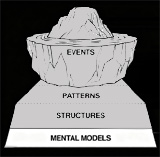
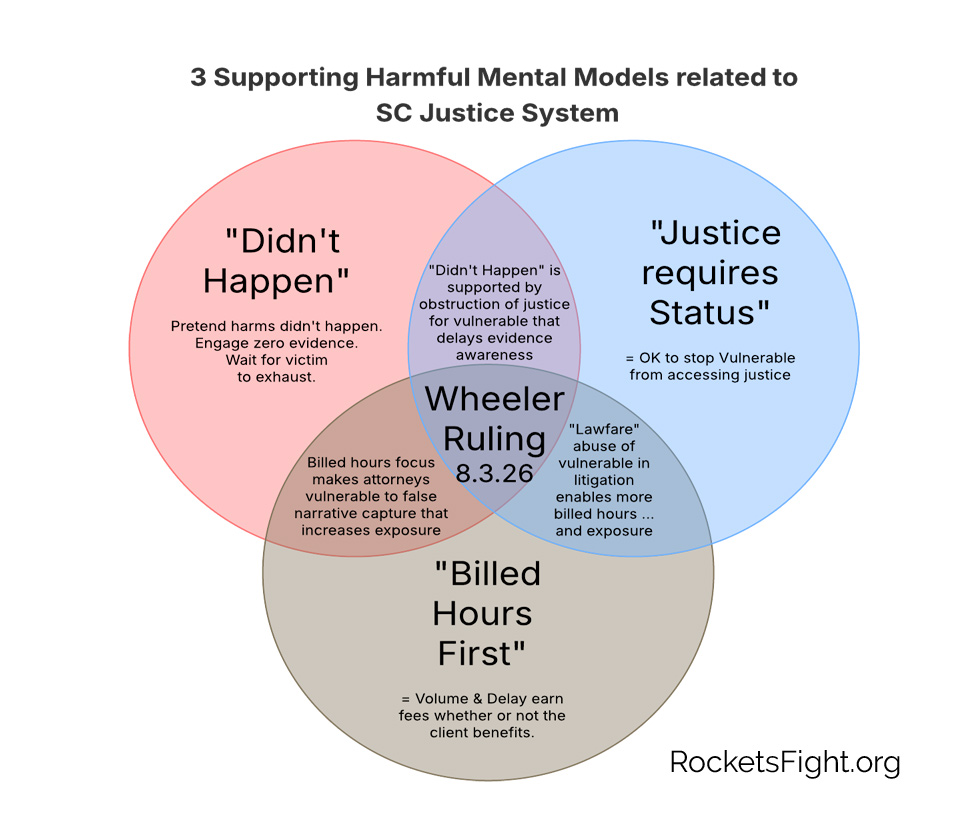 Three core, underlying belief systems have been identified as the key Mental Models behind South Carolina’s justice system and what it enables.
The first: the "Didn't Happen" storyline. Pretend the harm isn’t there, engage zero pieces of evidence, and wait for the Plaintiffs to run out of money, time, and stamina.
The second: "Justice Requires Status". Justice for the privileged, the connected .. those with status. Never mind the 14th Amendment of the United States Constitution.
The third: "Billed Hours First". Motion volume and delay earn fees either way, so time itself becomes the product.
These are the foundation of the eighteen errors in one signed order, South Carolina’s 50th out of 50 lawyer density, bottom tier access-to-justice numbers, and one of the - if not THE weakest legal economies in the United States.
What they have in common is zero-sum game thinking. “You have to take in order to have.” They ignore the reciprocity and emergent properties that systems thinking teaches us to look for. What if we adopted different core belief systems? The concept that a system operates better for everyone when built for its most vulnerable member (or MVM is highly supported across academia. In scholarly literature, this approach is studied under frameworks like Universal Design, Inclusive Design, and Systems Theory. The core argument is that designing for extreme needs eliminates friction for the average user, creating a more robust, adaptive, and resilient system.
In economics and public policy, this phenomenon is formally known as The Curb-Cut Effect. Named after the street-corner ramps originally demanded by disability activists in the 1970s for wheelchair users, research shows that these modifications generated massive "positive externalities" (unintended benefits for society).
South Carolina has instead built its curbs 100 feet high so even athletes have to use ropes and ladders to get over them. How about we cut the curbs instead and reinvigorate the legal economy, access to justice for the vulnerable, and success for good faith lawyers all at once? It’s about time.
The Path Back Up: The Seven Level Pullamid
Systems thinking drills down from events to mental models. Strategic Thought Leadership then climbs back up: change the mental model and the structures, patterns, and events above it reorganize. The Seven Level Pullamid maps that path across Core Mission, Identity, Values, Mental Models, Skillset, Pull, and Pullfillment. Two levels do the heavy lifting here.
Values. The baseline position runs on power, success, and status, with confidence, justice, fairness, and integrity going unmet. The Thought Leadership Position meets those unmet values directly: integrity, justice, fairness, compassion, and wisdom, and, paradoxically, delivers more durable status than status-seeking ever did.
Mental Models. The baseline model reads: if we obstruct the vulnerable, it protects our power, which means we hold special status over others. The MVM4-All replacement reads: if the system supports access for the vulnerable, it works better for everyone, which means everybody wins with a better system. Reciprocity creates emergent value; obstruction destroys it. The full model appears in Plaintiffs’ Position Paper MVM-4-All (June 16, 2026).
Applied here: the replacement model treats an unopposed amendment under a freely-given standard as the system working, grants it inside the rule’s spirit, and reserves judicial force for contested questions.
To the Supreme Court
Plaintiffs served a Petition for Writ of Certiorari on August 19, 2026, and it entered the docket August 20, 2026 (docket sequence P1A65). The petition asks the Supreme Court of South Carolina to review the questions this ruling raised and the two-day, 48-hour form denial that closed the Rule 59(e) door.
Then the docket added its own exhibit. Plaintiffs emailed the petition to the court as a born-digital PDF: searchable text, intact metadata, verifiable provenance. The court printed that digital file onto paper, scanned the paper back into a computer, and docketed the scan. Of the resulting 117 pages, 115 render as black-and-white bitonal images and two render as grayscale. The text layer, the metadata, and the hash chain all died in the round trip. The same act proves the court receives filings by email and can docket them, which happens to be the exact capability Plaintiffs’ pending ADA accommodation request asked the court to acknowledge. The court demonstrated the capability while degrading the document. You can read about the full measurement study of 37 docket artifacts and 1,493 pages at housingjusticeaudit.com. As the saying goes: you can’t make this stuff up. The scanner settings tell their own story, in their own file properties, in the court’s own docket.
For questions about this ruling, the eighteen errors, and Plaintiffs' paths in Federal Court, contact:
Chris McNeil, Pro Se Plaintiff
Email: Click here to email with web form
Case: 2025-CP-10-05095, Charleston County Court of Common Pleas
Document Access
Order of Dismissal With Prejudice, August 3, 2026 (Judge William W. Wheeler, III)
To Top
 Unable to view the pdf on your mobile device?
Download the PDF
Plaintiffs' Motion to Alter or Amend Judgment Pursuant to Rule 59(e), SCRCP, August 12, 2026
To Top
 Unable to view the pdf on your mobile device?
Download the PDF
Order Denying Plaintiffs' Rule 59(e) Motion, August 14, 2026
To Top
 Unable to view the pdf on your mobile device?
Download the PDF
How Much Was Copied
Plaintiffs measured the Order’s Analysis section against the defense briefs on the docket using word-sequence shingle matching at fixed run lengths and edit-tolerant sequence alignment. The method and full results appear in the Rule 59(e) Motion, Section XII and its provenance exhibit. Headline measurements:
| 17.6 percent | of the Analysis section’s text sits in verbatim runs of eight or more words shared with defense briefs |
| 507 | shared sequences trace to SAC 181’s May 22, 2026 memorandum alone |
| 128 words | the longest single verbatim run |
| 147 words | the Rule 12(b)(6) standard, with both case citations, matching SAC 181’s brief |
| 107 of 109 words | the § 27-40-610 notice passage matching SAC 181’s motion to dismiss |
The measurement is reproducible: the motion documents the exact runs and sources so any reader can verify any row. An order that adopts one movant’s brief, including its errors, and extends it to all defendants describes its own provenance.
Frequently Asked Questions
What does 'freely given' mean in practice?
South Carolina follows the liberal amendment policy: absent prejudice, bad faith, undue delay by the movant, or futility shown under the pleading standard, leave issues. An unopposed motion presents the easiest case the standard contemplates.
↩ Back to Where You Were
|
▴ FAQ Menu
How did an unopposed motion end up denied with prejudice?
The order routed it through the sanction: amendment denied as futile 'even in the absence of sanctionable conduct' and as an additional sanction besides, while expressly declining 12(b)(6) analysis of the proposed claims (Error 10). The freely-given standard appears nowhere in that chain.
↩ Back to Where You Were
|
▴ FAQ Menu
Where can I verify this error myself?
Every quotation on this page appears verbatim in the August 3, 2026 Order of Dismissal With Prejudice, available on the Charleston County public docket at sequence P1A58 and as a PDF on this page. Search the quoted words in the PDF text or read the cited page. The Rule 59(e) Motion (docket sequence P1A62) presents the same quotation with the record citation beside it.
↩ Back to Where You Were
|
▴ FAQ Menu